

Maplewood State Park
Natural Beauty Born in the Ice Age
Glaciation created the park’s rolling typography, lakes & wetland basins.

Talking Trail Audio Story
Ice Leaves Its Mark
Maplewood State Park lies on a series of hills near the eastern edge of the Red River Valley. These hills, part of the Alexandria Moraine, were deposited during the last ice age. Relief was abrupt, with changes of about 300 feet in less than a mile. The highest hills in the park approach 1,600 feet, providing striking vistas of clear lakes nestled in deep valleys. Lake Lida, the largest lake in the park, was probably formed when the last glacier retreated 20,000 years ago and left ice stranded in a valley. The ice melted, exposing the basin and allowed the present lake to form.
Park Legislative History
The idea of establishing a park in the area goes back to 1923 when Maplewood was originally proposed at the legislature. Through efforts of the Maplewood State Park Association the idea became a reality. The park was established in 1963 to protect the area’s unique natural and cultural resources and consisted of a little over nine sections of approximately 5,600 acres. The association made the first few purchases of land and a park road system was started. Most of the land acquisition was done in the 1960s and 1970s.
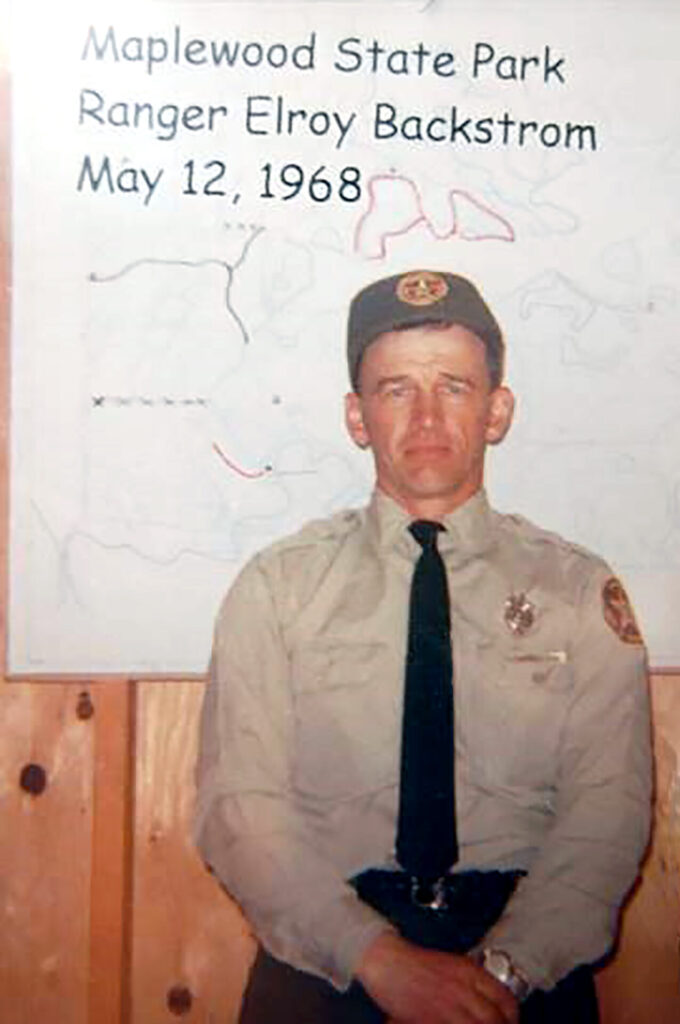
ranger, 1968
The park now provides a public recreational area of about 9,250 acres. Its many attractions offer visitors a variety of recreational opportunities throughout the year.
Wetlands
Along with the hills, most of Maplewood’s wetlands were also formed during the glacial periods. Although many of the original wetlands were drained for farming, more than 50 have been restored.
Wetlands serve a variety of beneficial functions including providing food and habitat for wildlife, maintaining water quality by filtering pollutants and reducing flooding.
Wildlife
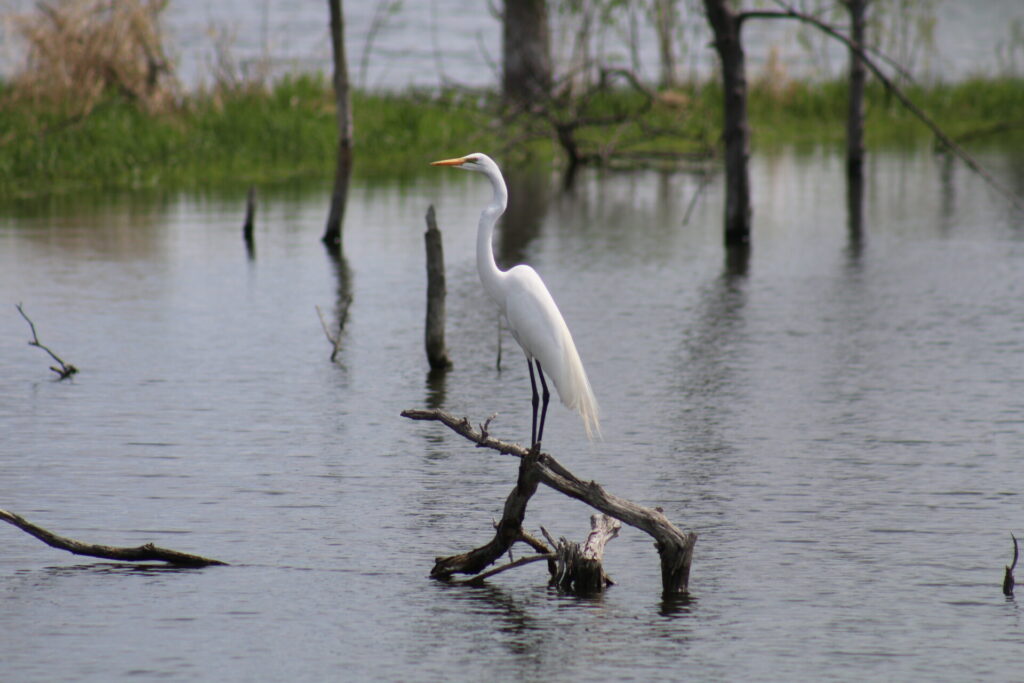
Maplewood’s scenic drive allows visitors to observe wildlife. The park is host to 150 bird species, 50 species of mammals and 25 types of reptiles. Beavers are active in some lakes, while white-tailed deer, raccoons, squirrels, rabbits and chipmunks can be seen frequently. Herons and other large, wading birds are found in the summer, seeking food in the shallows. Birds of prey can be seen hunting. Their nests are sometimes found in heavily wooded areas.
Lakes
Eight major lakes and many ponds in the park offer fishing, boating, canoeing and relaxation. South Lake Lida, the largest, deepest lake in the park at 856-acres also offers a sandy beach for swimming and a wonderful area for picnics. Several of the lakes support game fish populations.
Visitor Experience
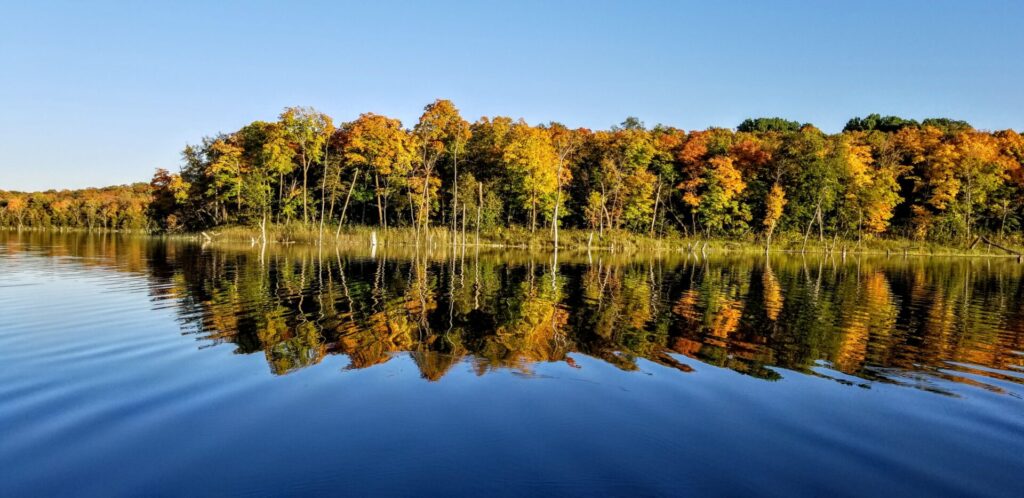
Maplewood State Park is well known for its spectacular fall colors. The hardwood trees including sugar maple, basswood, American elm, and oak, display brilliant shades of orange, gold, and red each year.
Upland flowers are common, with representatives from both prairie and forest. The forest floor has many striking spring flowers; trillium, bloodroot, and liverwort being common. Prairie species include wild onion, showy milkweed, beardtongue, and prairie rose. Many flower in late summer and fall.
There is a variety of camping opportunities from primitive backpack sites to modern electric sites and includes lakeside, wooded, and open sites.
The extensive trail system attracts hikers, horseback riders, snowmobilers, and skiers.
Pine to Prairie International Birding Trail
Maplewood State Park contains one of the stops on the Pine to Prairie International Birding Trail . More than 200 miles in length, the trail runs along the prairie and forest transition zone. Species from both ecosystems mingle within this corridor and offer birders an opportunity to see birds from different habitats.
A Variety of Species
There are more than 150 bird species that breed in the park, 40 mammal species and 25 reptile and amphibian species, with 25 miles of hiking trails leading through several interesting habitats. Birds can also be spotted in the riparian zones surrounding the lakes and wetlands within the park and along Park Drive. Look for vultures and eagles from the Hallaway Hill Overlook. Here are some other birds to look for:
- Broad-Winged Hawk
- Eastern Bluebird
- Great Blue Heron
- Great Egret
- Green Heron
- Golden-Winged Warbler
- Indigo Bunting
- Red-Eyed Vireo
- Red-Shouldered Hawk
- Scarlet Tanager Osprey
- Wood Duck
Additional Birding Information
Minnesota Department of Natural Resources www.dnr.state.mn.us
Pine to Prairie Birding Trail www.mnbirdtrail.org
Check with tourism officials at Detroit Lakes, Fergus Falls, Pelican Rapids, Roseau, Thief River Falls and Warroad for information on birding locations and assistance with trip planning.
