

Henning
On the Crossroad to the Prairie & A Gateway to Lakes Country

Talking Trail Audio Story
(no audio file for this site)
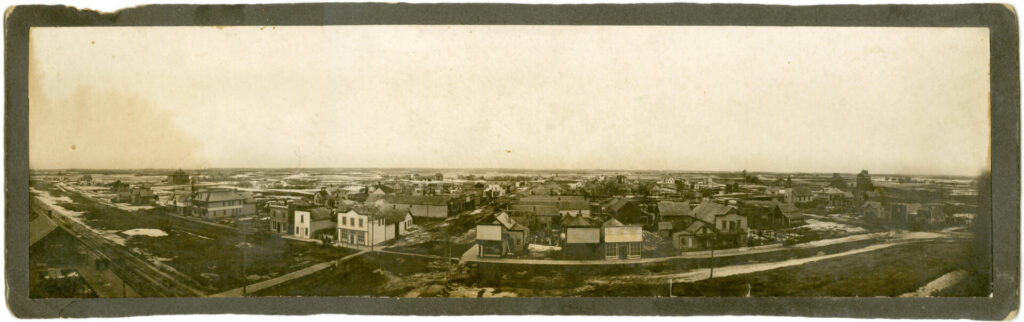
How Henning was Named
Henning was first known as Pease Prairie, after Benjamin Pease, an early traveler who made note of the area’s rich prairie. The name was changed to Henning in tribute to John O. Henning, a land appraiser for the Northern Pacific Railroad when the branch was being built. He proposed that if his name was selected for the village, he would donate a bell to the first church. He kept his promise as the first church bell, courtesy of John Henning, was hung in the steeple of the Norwegian Lutheran Church.
Preserving History
In an effort to save their historic landmarks, Henning has two buildings listed on the National Register of Historic Places, Trinity Church and Landmark Center.
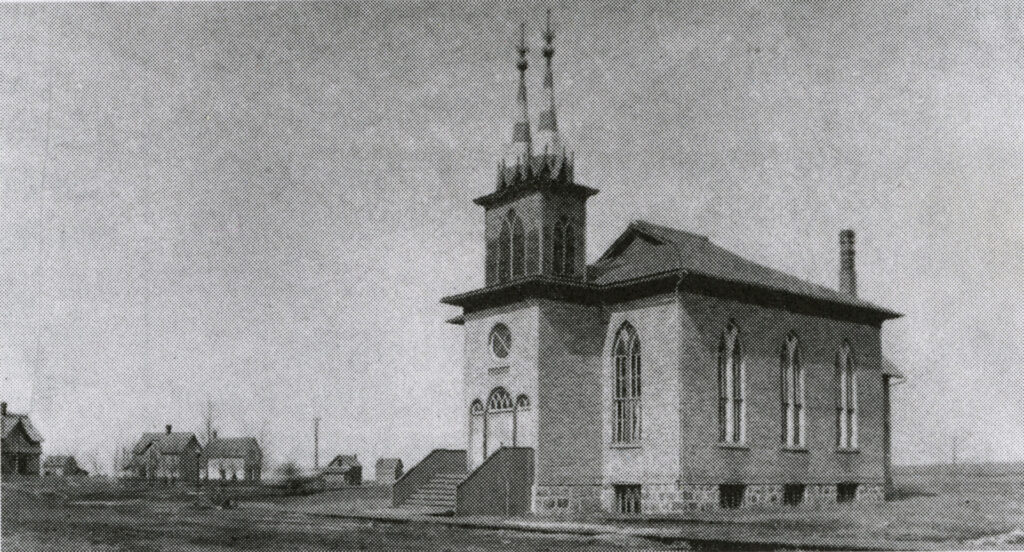
Trinity Church 1898
Trinity is the direct result of a split within a Norwegian immigrant Lutheran church. No longer bound by a state church, congregations like Trinity began to experience America’s democracy and religious freedom. A majority of Trinity’s members voted to separate from the United Norwegian Lutheran Church to join a newly formed church body, the Lutheran Free Church. Those that voted not to split formed their own church. The entire congregation was learning and practicing democracy while determining the proper American expression of Norwegian Lutheranism. Trinity is also a unique example of the Gothic Revival style. No known church building in Minnesota has twin spires rising from a single tower.
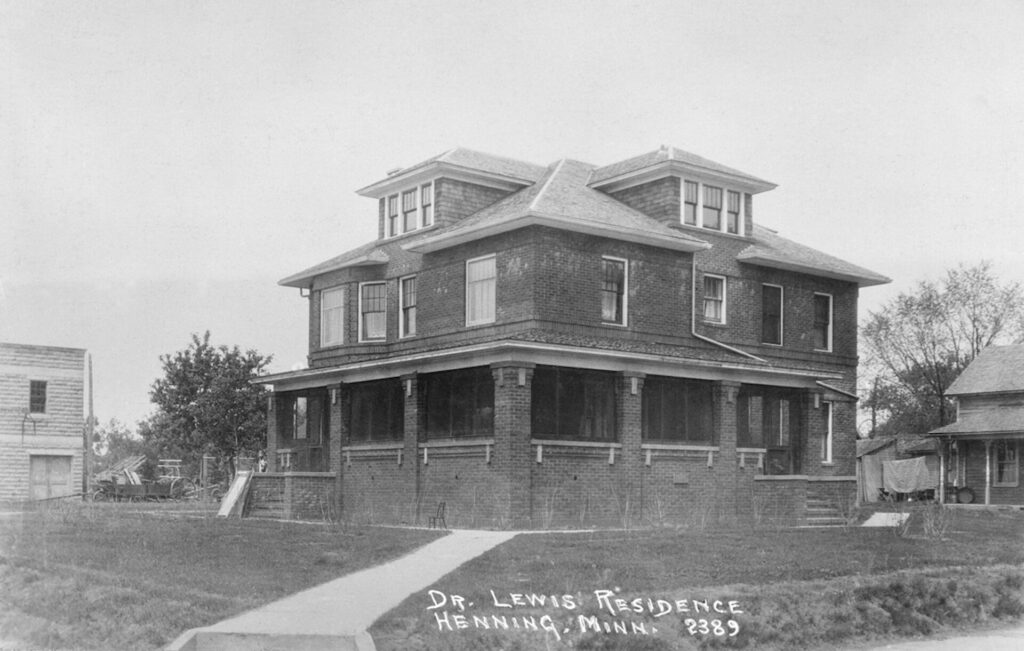
Landmark Center 1914 (Lewis House &
Medical Office)
The Prairie style building was the home and medical clinic of Dr. A.J. Lewis. A 1909 graduate from Chicago’s Rush Medical College, Lewis came to Henning in 1911. Lewis had this building constructed in 1914. As the practice grew an addition was put on in 1948. It operated as clinic until 1990. The Landmark Center opened in 2009 as a community cultural center.
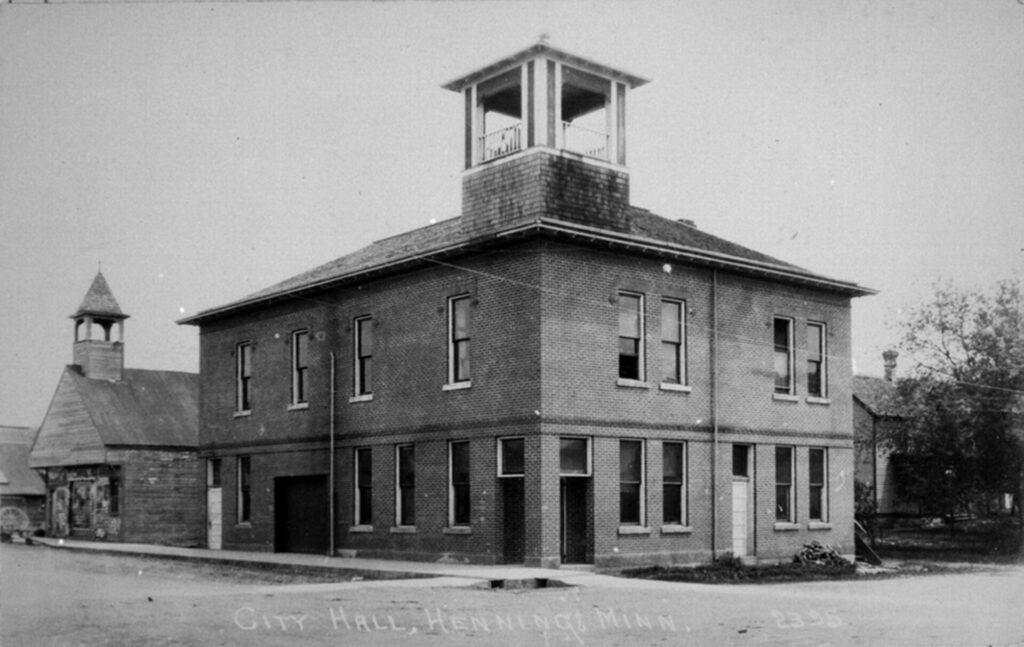
Henning City Hall
Built in 1914 the original City Hall included a 2nd floor basketball court, stage for plays and school commencements, bell tower with lookout used in WWII for airplane spotting, and the site of the first Municipal Liquor Store in Otter Tail County.
Railroad
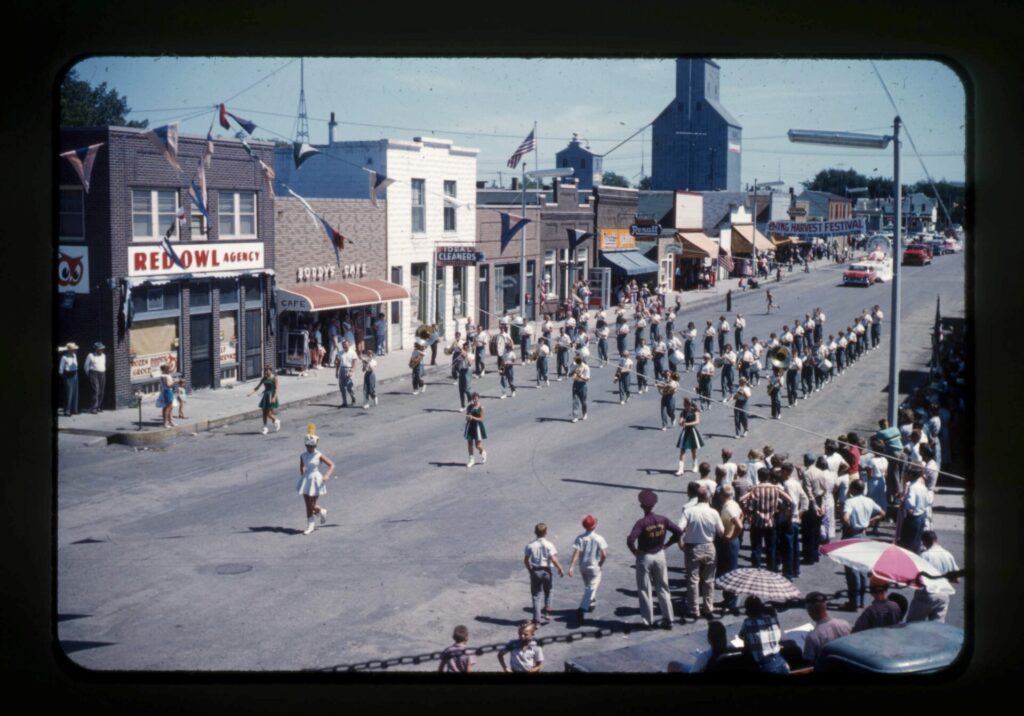
The arrival of the Northern Pacific, Fergus and Black Hills Railroad in October 1881, provided a much needed boost to the fledgling town. The area was ripe for wheat production, and wheat and flour needed to be shipped. The fact that four grain elevators could exist in such a small town was evidence of the importance of the railroad and farming. For a time Henning was billed as the ”wheat capital” of Otter Tail County. In addition, as Henning grew the railroad provided transportation for needed supplies. With the addition of the Soo Line in 1903, Henning was one of a few towns that were served by two railroads.
WWI [From the collections of the Otter Tail County Historical Society]
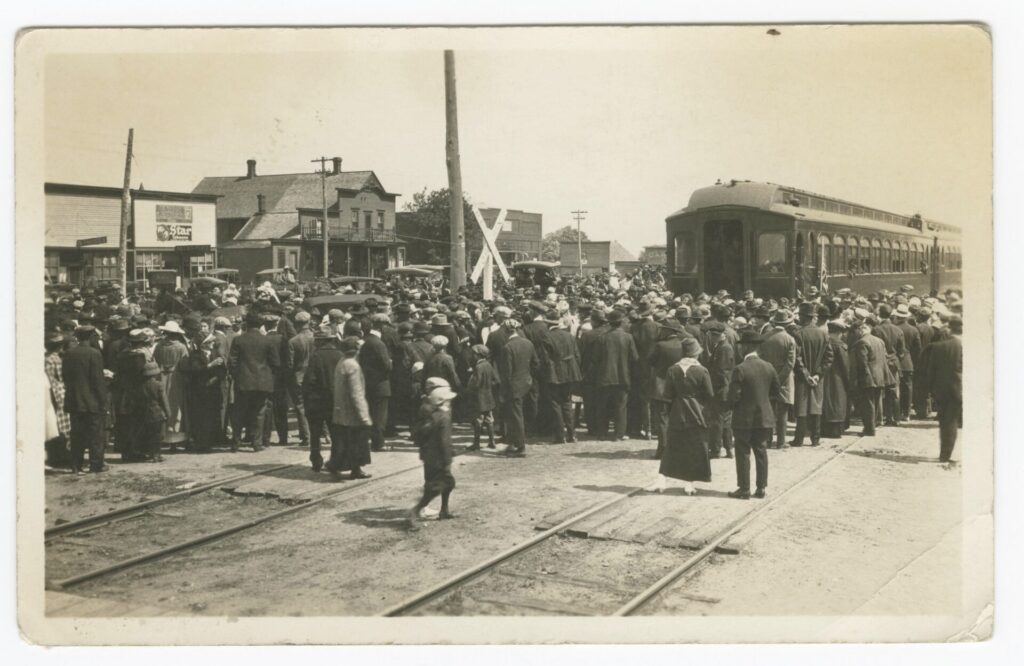
When the United States entered World War I in April 1917, Henning was selected as the location of the East Otter Tail Draft Board. Thousands gathered in May 1917 to give the boys heading to service a patriotic farewell. They formed a line on Main Street with the Henning-Perham Community band in front and marched to the Northern Pacific Depot for a rousing send off.
Henning was a daily stop for several commuter train lines. On the Northern Pacific line, a one car train known as the Galloping Goose ran daily from Staples, Minnesota to Oakes, North Dakota and back again.
The Soo Line ran the Winnipeg Flyer. The Flyer had a high point in March 1927 when it carried the Henning High School “Giant Norsemen” basketball team. After winning the state championship in St. Paul, the squad was met by what the Henning Advocate described as “a reception, bordering on a demonstration, was accorded the conquerors.” A huge bonfire greeted the steam engine as a parade from the depot to downtown was led by the village fire truck while the community band played “The Gang’s All Here.”
