
Glendalough State Park
Tallgrass Prairies, Lakes, Fish & Waterfowl
An 89-Year Journey From Resort to Resource

Talking Trail Audio Story
‘’I started with surprise and delight! I was in the midst of a prairie! We passed whole acres of blossoms all bearing one hue, as purple, perhaps, or masses of yellow or rose; and then again a carpet of every color intermixed, or in narrow bands, as if a rainbow had fallen upon the verdant slopes. The iridescent glow was beautiful and wondrous beyond anything I had ever conceived.” —Eliza Steele, “Summer Journey in the West” (1840)
History
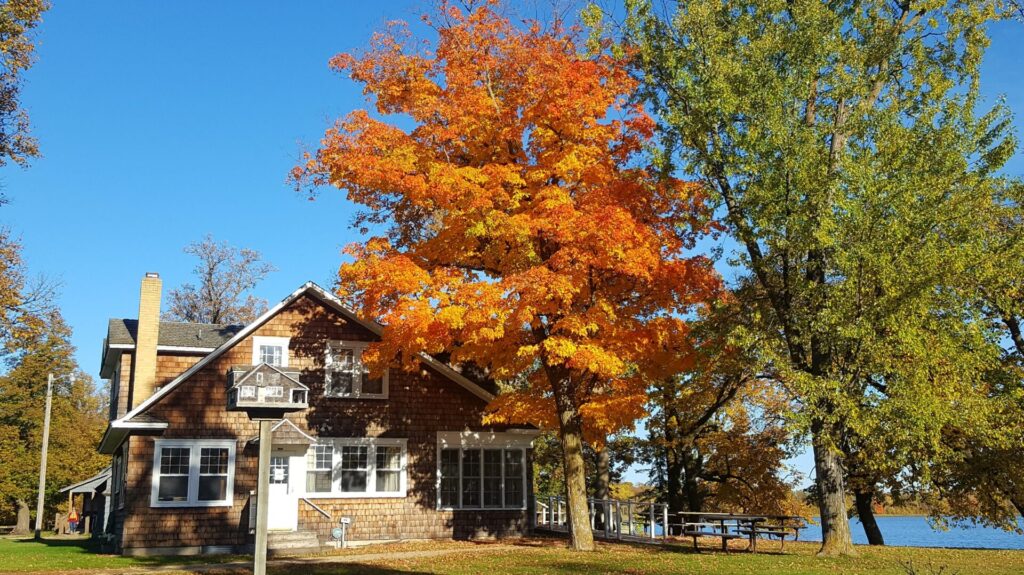
Glendalough was first developed by Ezra G. Valentine in 1903 and was a summer retreat called Valentine’s Camp. The camp included a cottage, stables, boat house and bath houses. Valentine left the property to his son and daughter in 1905, who later sold it to Fred A. Everts.
In 1928, Everts sold the property to F.E. Murphy, who owned the Minneapolis Tribune. He renamed the camp “Glendalough” after a glacial valley monastery in Ireland, which is an Irish term meaning “Valley of Two Lakes.” Murphy purchased the surrounding farms, expanding Glendalough’s acreage, and started a turkey and game farm.
Glendalough and the Minneapolis Tribune were purchased by the John Cowles family in 1941. Over the years, the game farm and hunting preserve hosted several dignitaries, including Presidents Dwight Eisenhower and Richard Nixon, and Vice- President Walter Mondale. On Earth Day 1990, this largely natural and undeveloped property was donated by the Cowles family to The Nature Conservancy. In 1992, the deed was transferred to the Minnesota Department of Natural Resources for use as a state park.
The Park
Glendalough was a private game farm and corporate retreat for approximately 89 years before becoming a state park. This type of stewardship preserved marshlands, hardwood forests, open lakes, shoreline and native prairies. Containing almost 2,000 land acres, the park provides impressive wildlife viewing with a large resident Canada Goose population, a major waterfowl staging area, and a wintering area for local white-tailed deer.
Glendalough is home to abundant populations of white-tailed deer, raccoon, red fox, and smaller mammals. The park also offers excellent birdwatching for a variety of species of prairie, wetland, and hardwood forest birds. An eagle nest and fresh beaver cuttings can be viewed from the park trails, and loons are common on the park’s lakes.
The Lakes
The park includes six lakes comprising approximately 1,000 acres of water, with a variety of fishing opportunities and wildlife viewing. One of the last large tracts of undeveloped lakeshore in western Minnesota (9.2 miles) lies within the park. • Annie Battle Lake is the largest lake at 335 acres contained within the park’s boundaries.
- Annie Battle Lake is the largest lake at 335 acres contained within the park’s boundaries.
- Molly Stark Lake, the park’s picnic spot, has a public boat access.
- Lake Emma is a shallow wildlife habitat lake with excellent wildlife viewing.
- Sunset Lake is a favorite of the parks waterfowl. • Lake Blanche and West Battle Lake are on the park’s northern and southern borders.
Heritage Fishery
Annie Battle Lake was within the private Glendalough game farm for more than 50 years, therefore its fish populations were only lightly exploited. This presented a unique opportunity to manage the lake as a “Heritage Fishery” to build up a natural population of larger, older fish, and to establish a demonstration and education area for fisheries management. Annie Battle Lake was closed for several years to allow fish populations to recover.
Tallgrass Prairies
The western portion of Glendalough State Park is a remnant of the tallgrass prairies that covered millions of acres of America only 170 years ago. These once Pelican River Otter Tail River C ent r al L akes Tr ail SITE 3 YOU ARE HERE MANITOBA NORTH DAKOTA SOUTH DAKOTA NEBRASKA KANSAS MINNESOTA IOWA WISCONSIN ILLINOIS MISSOURI ARKANSAS MICHIGAN INDIANA OHIO KENTUCKY TENNESSEE OKLAHOMA ONTARIO C A N A D A Lake Michigan Approximate pre-settlement range of tallgrass prairies in the Midwest Green indicates areas composed mostly of tallgrass prairie. Tan represents areas with scattered, smaller prairies, extensive savannas and open oak woodlands [Map from “Tallgrass Prairie Wildflowers” by Ladd/Oberle] vast grasslands ranged from the Gulf of Mexico north into Canada. From the Rocky Mountains east through Illinois, tallgrass prairies are characterized by grasses that grow three or more feet tall, along with a rich assortment of flowering plants and shorter grasses and sedges.

WELCOME to the Hiking Trails
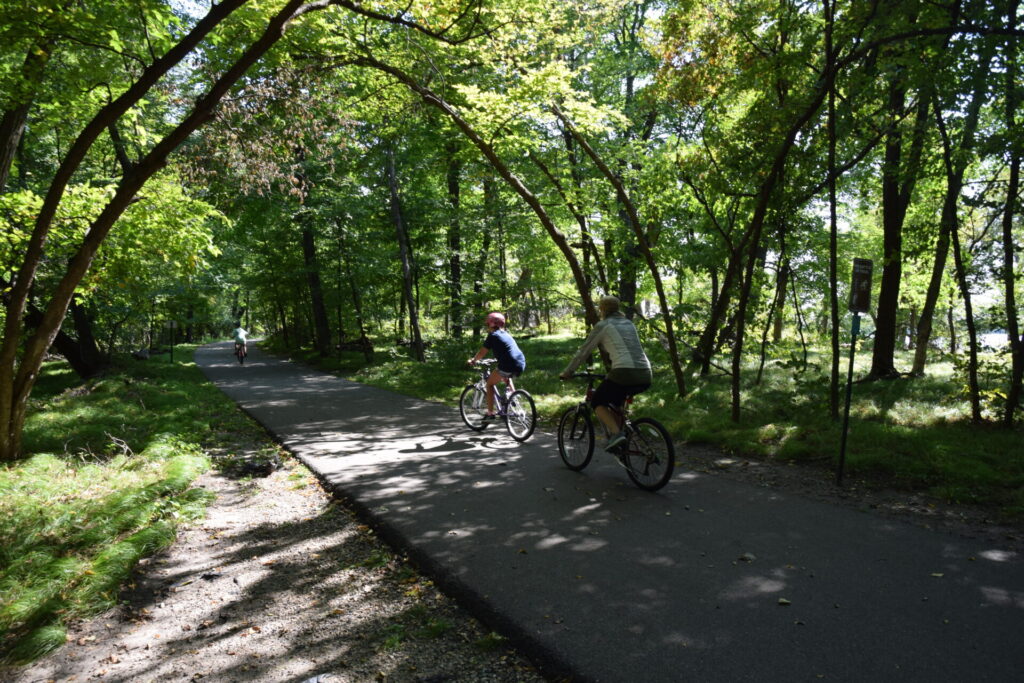
WELCOME to the Hiking Trails Glendalough State Park has many miles of hiking and biking trails that quietly sneak their way into the park’s wetlands, prairies and sandy beaches. Trails of varying distances traverse six lakes each with unique characteristics offering refreshing views of the park’s scenery. Along the paved Glendalough Trail, interpretive kiosks highlight the oldest Native American archeology in the state. Additionally, you’ll learn about the monarch butterfly’s intriguing life, and be able to see the prairie plants change through the seasons.
The Parks Many Activities
Park visitors can enjoy fishing, swimming on several beaches, canoeing, kayaking, and paddle boarding through the connecting streams of the lakes. Equipment rental for these activities is available in the park. There are also picnic areas, camping (tent, cabin and yurt), hiking, biking on the paved and unpaved trails and birding. Modern restroom and shower facilities are conveniently located near parking areas.
