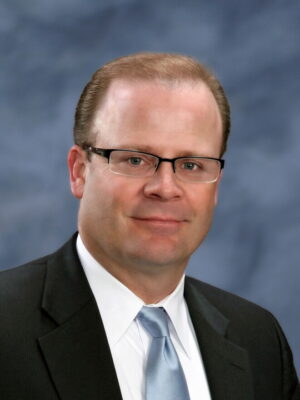
David Lose Wins 2025 Great American Think-Off
Record Audience Chooses “Many Truths” in 32nd Annual Philosophical Debate
New York Mills, MN – June 19, 2025 – The 32nd Annual Great American Think-Off took place on Saturday, June 14, 2025, drawing a record-setting crowd of nearly 300 people to rural New York Mills, Minnesota—and hundreds more tuning in online. The debate tackled the timely and thought-provoking question: “Is there only one truth, or are there many truths?”
The audience voted in favor of “many truths,” awarding the title of America’s Greatest Thinker 2025 to David Lose, a pastor from Eden Prairie, MN. Lose made his winning case in the final round against Pavithra Krishnan, a business student from Troy, MI, studying at Indiana University.
This year’s event took place on a somber day for Minnesota, following the tragic assassinations of House Leader Melissa Hortman and her husband, and the shooting of State Senator John Hoffman and his wife. Minnesota Governor Tim Walz opened his press conference about the assaults that morning, stating, “Peaceful discourse is the foundation of our democracy.” Cultural Center Executive Director Betsy Roder echoed this sentiment, noting, “Civil discourse has always been the core value of the Think-Off, and it’s more important now than ever.” She later added, “We wonder if this year’s record attendance reflects a deep hunger to see everyday people engage in respectful, open-minded conversations about meaningful issues in a civil manner.”
In the first round of debates, David Eckel of Clayton, North Carolina, and Pavithra Krishnan both argued in favor of the position that there is only one truth. Eckel used the metaphor of a forest to illustrate how truth, like nature, is too vast to be fully grasped by any one person. He offered a philosophical take on the question, “If a tree falls in your forest and nobody hears it, did it make a sound?” He explained that if sound is defined as a sonic wave, then yes, it exists—an objective truth. But if sound is defined as perception, then no. Eckel argued that while there may be one forest—one reality—our understanding of it is always partial.
Krishnan, meanwhile, drew on math and science to argue that even if individual understanding is limited, truth itself remains constant. She contended that different perspectives do not equate to different truths—only different levels of comprehension. The audience decided that Krishnan made the stronger case and voted to advance her to the final round.
The second round featured Jay Sieling of Miltona, Minnesota, and David Lose, who both argued that there are many truths. Sieling approached the debate through the lens of storytelling, reflecting on a conversation with his grandson about how experience and narrative shape truth. Lose argued that truth is more an act of faith than a matter of provable fact. He suggested that we should “hold” our truths—asserting them with conviction while remaining open to dialogue and change. The audience favored Lose’s nuanced and thoughtful argument, advancing him to the final round, where he added to his position and ultimately won the gold medal and title of America’s Greatest Thinker 2025.
The debate was moderated by Trygve Throntveit, Global Fellow for History and Public Policy at the Woodrow Wilson International Center for Scholars and Director of Strategic Partnerships at the Minnesota Humanities Center. In his second year as moderator, Throntveit brought humor, insight, and skillful guidance to the debate, keeping the conversation on track and engaging for all.
This year’s event was also shaped by an exceptional group of writers and thinkers from across the U.S. and beyond. Miriam Santos, a teacher from Namibia, and Sherry Vavra, an executive director from Arkansas, were both selected as finalists but were unable to attend the live debate; both received Honorable Mentions. Four alternates who traveled to New York Mills also received Honorable Mentions: Laurie Fitz (Independence, MN), Blaine Rada (Darien, IL), Ron Stewart (Coon Rapids, MN—the district where the assassinations occurred), and Marcia Witt (Ijamsville, MD). Two additional Honorable Mentions were named: Katherine Tencza (Edison, NJ) and Angela Loupe (Murfreesboro, TN). The essays from the four finalists and all eight Honorable Mentions will be published on the Think-Off website: www.kulcher.org.
The Great American Think-Off is a unique, annual philosophy debate that invites people from all walks of life to wrestle with life’s big questions. Each year, four essayists are selected as finalists, awarded $500, given an expense-paid trip to New York Mills, and participate in a live debate before an audience that votes to determine the winner. Over its 32-year history, the event has drawn submissions from all 50 U.S. states and over 30 countries.
The 2025 Think-Off was sponsored in part by the Minnesota Humanities Center for the second consecutive year, along with many local business sponsors. This activity was made possible in part by the voters of Minnesota through grants from the Lake Region Arts Council and the Minnesota State Arts Board, thanks to a legislative appropriation from the arts and cultural heritage fund.
About the Great American Think-Off:
Now in its 32nd year, the Great American Think-Off is a one-of-a-kind philosophy contest where ordinary people tackle extraordinary questions. Created to make philosophy accessible to all, the Think-Off invites thoughtful debate in a respectful, engaging format. It has been featured by C-SPAN, the New York Times, The Today Show, and other national media.
The event is sponsored by the New York Mills Regional Cultural Center, a rural hub for creativity, community vitality, and lifelong learning in the arts. Since 1990, the Center has connected people with artists and rich cultural experiences in rural Minnesota—celebrating the local and providing a window to the world. More information on the Cultural Center can be found at www.kulcher.org
Explore the history of the Think-Off, past questions, and current and past winners at: www.think-off.org